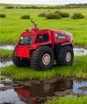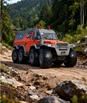

A fire truck, also known as a fire engine or a fire apparatus, is a specialized vehicle used by fire departments and emergency services to respond to various types of incidents, particularly fires. These vehicles are equipped with a wide range of features and tools designed to help firefighters combat fires, rescue people, and provide emergency medical services.
The chassis of a fire truck serves as the vehicle's foundation and includes the engine, transmission, and wheels.
Fire truck chassis can be custom-built to accommodate specific requirements and can vary in size and design based on the intended use.
The cab is the front portion of the fire truck where the driver and firefighters sit. It is equipped with seating, controls, and communication equipment.
The cab may be crewed by a minimum of two firefighters and can accommodate additional personnel as needed.
Communication equipment includes radios, intercom systems, and sirens to signal the truck's approach.
Fire trucks typically have a water tank to store a significant amount of water for firefighting.
The tank's capacity varies depending on the size and purpose of the fire truck.
Water tanks are made from durable materials and may be constructed from materials such as steel or polypropylene.
Fire trucks are equipped with a pumping system that can pressurize and distribute water to hoses and nozzles.
The pumping system can vary in capacity and capabilities, but it is a crucial component for effective firefighting.
Modern fire trucks often have a centrifugal pump that can deliver high-pressure water.
Fire trucks have a variety of hoses and nozzles designed for different purposes.
Hoses are typically made of durable materials such as rubber or synthetic materials.
Nozzles can be adjusted to control the flow and pattern of water, allowing firefighters to target the fire accurately.
Some fire trucks feature a water monitor, also known as a deck gun, which is a large nozzle that can be controlled remotely.
Water monitors are often used to deliver a high volume of water from a stable platform, typically mounted on top of the fire truck.
Fire trucks may carry ladders of various types, including extension ladders and aerial ladders.
Ladders are used for access, rescue, and as a vantage point for firefighting operations.
Aerial ladders can be extended to reach elevated areas, such as multi-story buildings.
Fire trucks are equipped with numerous storage compartments to house firefighting and rescue equipment.
Equipment can include fire extinguishers, tools, ropes, hydraulic rescue tools, ventilation fans, and more.
In addition to water, fire trucks may carry other fire suppression agents, such as foam, dry chemical, or carbon dioxide, depending on the type of fire.
These agents can be used to extinguish various types of fires, including flammable liquids and electrical fires.
Fire trucks are equipped with a range of emergency lighting, including red, blue, and white lights.
Sirens and air horns are used to alert other road users and clear the path for the responding fire truck.