

In the realm of modern law enforcement and public order management, riot vehicles play a pivotal role. These specialized vehicles are designed to handle complex and often volatile situations, ensuring the safety of both law enforcement officers and the public. One of the critical challenges that riot vehicles face is electromagnetic interference (EMI). In this blog, as a supplier of riot vehicles, I will delve into how our riot vehicles are engineered to protect against electromagnetic interference.
Understanding Electromagnetic Interference in Riot Vehicles
Electromagnetic interference refers to the disruption of electronic systems caused by electromagnetic radiation. In the context of riot vehicles, EMI can come from a variety of sources. Radio frequency (RF) emissions from communication devices, such as police radios and mobile phones, can interfere with the vehicle's on - board electronics. Additionally, external sources like high - power transmitters, electrical substations, or even the electromagnetic pulses generated by some non - lethal weapons can pose a threat.
The consequences of EMI on riot vehicles can be severe. It can disrupt vital functions such as the vehicle's communication systems, navigation equipment, and weapon control systems. For example, if the communication system is interfered with, law enforcement officers may not be able to receive or transmit critical information, which can lead to miscoordination and potentially dangerous situations. Similarly, interference with the navigation system can cause the vehicle to deviate from its intended route, delaying response times.
Shielding Technologies
One of the primary ways our riot vehicles protect against EMI is through the use of shielding technologies. Shielding involves creating a barrier that blocks or reduces the penetration of electromagnetic waves.
Conductive Coatings
We apply conductive coatings to the interior and exterior of the vehicle's body. These coatings are made of materials with high electrical conductivity, such as copper or nickel. When an electromagnetic wave hits the coated surface, the conductive material redirects the electrical current around the protected area, preventing it from entering the vehicle's interior. This effectively shields the on - board electronics from external EMI sources.
Metallic Enclosures
For sensitive electronic components, we use metallic enclosures. These enclosures act as Faraday cages, which are designed to block electromagnetic fields. The metallic walls of the enclosure create a continuous conductive surface that absorbs and redistributes the electromagnetic energy. By placing critical components like communication modules and control units inside these enclosures, we ensure that they are isolated from external EMI.
Filtering and Isolation
In addition to shielding, filtering and isolation techniques are employed to protect the vehicle's electronics from EMI.

EMI Filters
EMI filters are installed in the power supply lines and signal cables of the vehicle. These filters are designed to allow the desired electrical signals to pass through while blocking unwanted electromagnetic frequencies. They work by using a combination of inductors, capacitors, and resistors to attenuate the EMI. For example, in the power supply system, an EMI filter can remove high - frequency noise that may be introduced by the vehicle's engine or other electrical components.
Isolation Transformers
Isolation transformers are used to separate different electrical circuits within the vehicle. They provide electrical isolation between the input and output circuits, preventing the transfer of EMI through the power lines. By using isolation transformers, we can ensure that each electronic system in the vehicle is protected from interference originating from other systems.
Grounding Systems
A proper grounding system is essential for protecting riot vehicles against EMI. Grounding provides a low - resistance path for electrical current to flow into the earth, which helps to dissipate any unwanted electromagnetic energy.
We design our riot vehicles with a comprehensive grounding network. All metallic components of the vehicle, including the body, chassis, and electronic enclosures, are connected to a common ground point. This ensures that any static charges or induced currents are quickly discharged to the ground, reducing the risk of EMI. Additionally, the grounding system helps to maintain a stable electrical potential throughout the vehicle, which is crucial for the proper operation of the on - board electronics.
Testing and Certification
Before our riot vehicles are released to the market, they undergo rigorous testing to ensure their effectiveness against EMI. We use specialized testing equipment to simulate various EMI scenarios, including exposure to high - intensity RF fields and electromagnetic pulses.
Our vehicles are also certified to meet international standards for EMI protection, such as the CISPR (International Special Committee on Radio Interference) standards. These certifications provide assurance to our customers that our riot vehicles are reliable and can withstand the challenges of real - world EMI environments.
Our Riot Vehicle Models
We offer a range of riot vehicle models, each equipped with advanced EMI protection features.
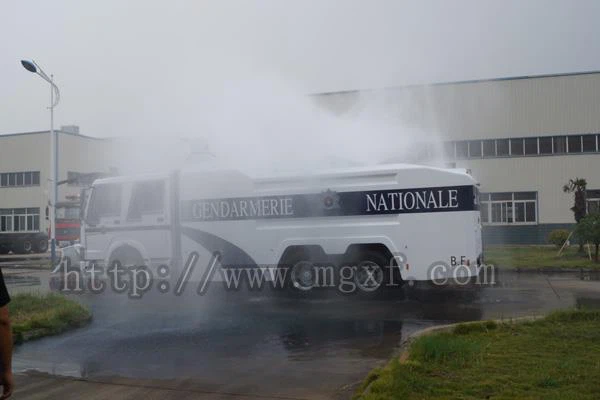
- 10000L Anti Riot Water Cannon Vehicle: This vehicle is designed for crowd control using a high - capacity water cannon. It is built with robust shielding and filtering technologies to ensure that its communication and control systems are protected from EMI, even in the most challenging environments.
- 10000L Anti Riot System Turbojet Vehicle: The turbojet vehicle is equipped with a powerful anti - riot system. Its advanced electronics are safeguarded by metallic enclosures and a comprehensive grounding system to prevent EMI - related disruptions.
- Armored Anti Riot Vehicle: This armored vehicle provides enhanced protection for law enforcement officers. It features state - of - the - art EMI protection measures, including conductive coatings and EMI filters, to ensure the reliable operation of its on - board systems.
Conclusion
In conclusion, protecting riot vehicles against electromagnetic interference is a complex but essential task. Through the use of shielding technologies, filtering and isolation techniques, proper grounding systems, and rigorous testing, our riot vehicles are designed to withstand the challenges of EMI. As a supplier, we are committed to providing high - quality riot vehicles that offer reliable performance in the face of electromagnetic threats.
If you are interested in our riot vehicles or have any questions about their EMI protection features, we encourage you to contact us for a detailed discussion. Our team of experts is ready to assist you in finding the best solution for your law enforcement or public order management needs.
References
- International Electrotechnical Commission (IEC). CISPR standards for electromagnetic compatibility.
- Handbook of Electromagnetic Compatibility, by Clayton R. Paul.
- Electromagnetic Interference and Compatibility, by Bernard C. Klinkenbusch.


