

Alright folks, today I wanna talk about something that's super crucial when it comes to fire trucks: how they maintain water pressure. I'm a supplier of fire trucks, so I've got a fair bit of knowledge on this topic.
Let's first understand why maintaining water pressure in fire trucks is so important. When firefighters are out there battling a blaze, they need a steady and powerful stream of water or foam to put out the fire effectively. If the water pressure drops, it means the stream might not reach the fire, or it won't have enough force to douse the flames. So, keeping that pressure up is a matter of life and death, really.

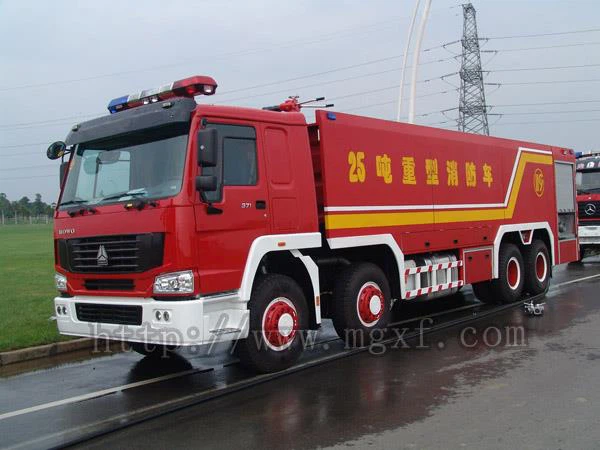
One of the key components in a fire truck that helps maintain water pressure is the pump. Now, the pump is like the heart of the fire truck's water - delivery system. It takes in water either from the on - board tank or an external source like a hydrant and then pushes it out through the hoses at high pressure.
There are different types of pumps used in fire trucks. Centrifugal pumps are pretty common. These pumps work by using an impeller, which is like a spinning wheel with curved blades. As the impeller spins, it sucks in water from the inlet and then flings it outwards due to centrifugal force. This creates pressure, and the water is forced out of the pump and into the hoses.
The size and power of the pump matter a lot. In larger fire trucks, like our 25000L Water Foam Fire Truck, we need a more powerful pump to maintain the high pressure required to push out a large volume of water. These heavy - duty pumps are designed to work efficiently and reliably, even under extreme conditions.
On the other hand, for smaller fire trucks such as our 3000L Light Duty Foam Tank Fire Truck, a less powerful but still effective pump is used. This is because they don't need to move as much water, and a smaller pump can still maintain the necessary pressure for their operations.
Another factor that affects water pressure is the water source. When a fire truck is connected to a hydrant, the pressure from the municipal water system plays a role. Sometimes, the hydrant pressure might not be enough on its own, especially in older areas or during peak water usage times. That's when the fire truck's pump kicks in to boost the pressure.
If the fire truck is using its on - board water tank, the height of the tank and the position of the pump also come into play. Water will flow from the tank to the pump due to gravity, but the pump still needs to increase the pressure for the water to be effective when it comes out of the hoses.
The hoses are also a crucial part of the equation. High - quality hoses are designed to withstand the high pressure of the water flowing through them. They need to be durable and have low internal friction so that the pressure doesn't drop significantly as the water moves through the hose.
Friction loss is a big deal when it comes to water pressure in fire trucks. When water flows through a hose, it rubs against the inner walls of the hose, creating friction. This friction causes the pressure to drop. The length of the hose, its diameter, and the speed of the water flow all affect friction loss.
For example, a longer hose will generally have more friction loss than a shorter one. So, firefighters need to be careful when laying out the hoses. They might try to use the shortest path possible to the fire to minimize friction loss and maintain water pressure. Also, the diameter of the hose matters. A larger - diameter hose will have less friction loss compared to a smaller - diameter hose, allowing the water to flow more freely and maintain pressure.
Now, let's talk about foam systems in fire trucks. In our 16000L Foam Tank Fire Truck, the foam system adds another layer of complexity to maintaining pressure. Foam is mixed with water in a specific ratio, and the pump needs to be able to handle the flow of this mixture.
The foam concentrate is stored in a separate tank. The pump has to draw the appropriate amount of foam from the tank and mix it with the water while still maintaining the right pressure for the combined flow. This requires precise control and calibration of the pump and the foam - mixing system.
Monitoring the water pressure is also essential. Fire trucks are equipped with pressure gauges that allow the firefighters to keep an eye on the pressure at different points in the system. If the pressure drops too low, they can take action, such as adjusting the pump speed or checking for blockages in the hoses.
In addition to all these mechanical and technical aspects, regular maintenance of the fire truck's water - delivery system is vital. The pump needs to be serviced regularly to ensure its components are in good working order. The hoses need to be inspected for leaks, wear, and tear. Any issues with the water tanks, such as cracks or blockages, should be addressed immediately.
If you're in the market for a fire truck, whether it's a large one for a big - city fire department or a smaller one for a rural area, you need to consider all these factors related to water pressure. You want a fire truck that can provide reliable and consistent water pressure when it matters most.
We at our company have years of experience in manufacturing fire trucks that are designed to maintain optimal water pressure. Our trucks are built with high - quality pumps, durable hoses, and precise foam - mixing systems. We understand the importance of having a fire truck that performs well in the heat of the moment.
If you're interested in learning more about our fire trucks or have any questions regarding water pressure or other features, don't hesitate to reach out. We're here to help you make the right choice for your fire - fighting needs. Contact us today to start the procurement discussion and find the perfect fire truck for you.
References
- Firefighting Equipment Handbook. A well - known guidebook that covers all aspects of fire - fighting equipment, including fire trucks and water - pressure systems.
- Proceedings of the International Fire Protection Conference. These conferences often feature research and discussions on the latest technologies and best practices for maintaining water pressure in fire trucks.


