

Hey there! As a fire trucks supplier, I've seen firsthand how crucial it is for fire truck crews to have top - notch fire - suppression training programs. These programs not only save lives but also protect property. So, let's dive into what these training programs are all about.
Basic Firefighting Skills Training
First off, every fire truck crew has to master the basic firefighting skills. This includes learning how to handle firefighting equipment properly. For example, knowing how to operate hoses is fundamental. A good fireman should be able to quickly connect hoses, adjust the water pressure, and direct the water stream accurately at the fire source.
Another important skill is using personal protective equipment (PPE). Crew members need to be trained on how to put on and take off their gear correctly. This gear, like helmets, fire - resistant suits, and breathing apparatus, can mean the difference between life and death in a fire situation. They also have to understand the limitations and maintenance requirements of their PPE.
Fire Behavior and Science Training
Understanding fire behavior is a key part of any fire - suppression training program. Fire truck crews learn about the different types of fires, such as Class A (ordinary combustibles like wood and paper), Class B (flammable liquids), Class C (energized electrical equipment), and Class D (combustible metals). Each type of fire requires a different approach to suppression.
They also study how fires spread. Factors like heat transfer (conduction, convection, and radiation), ventilation, and fuel sources all play a role in how a fire behaves. By understanding these concepts, crews can predict how a fire might develop and take appropriate action. For instance, if they know that a fire is spreading due to convection, they can try to disrupt the airflow to slow down the fire's progress.
Vehicle - Specific Training
Since I'm in the fire trucks business, I know that vehicle - specific training is essential. Fire truck crews need to be familiar with the features and capabilities of the trucks they operate. This includes learning how to drive these large vehicles safely in various conditions, especially during emergencies when time is of the essence.
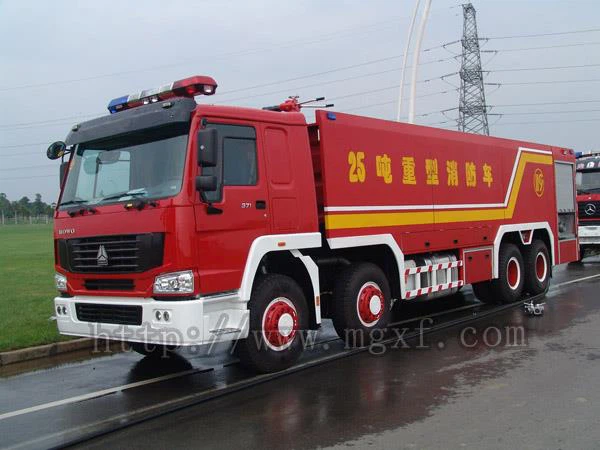
They also have to understand the onboard equipment. Our 30000L Heavy Duty Water Tanker Fire Truck has a massive water - carrying capacity, which means the crew has to know how to manage the water supply effectively. They need to learn how to connect to external water sources, like hydrants, and how to refill the tank when needed.
Similarly, for our 3000L Light Duty Water Tank Fire Truck, the crew has to understand its limitations and advantages. It's more maneuverable in tight spaces, but it has a smaller water capacity, so they need to be strategic about using the water.
The 25000L Water Foam Fire Truck comes with a foam - generating system. The crew has to be trained on how to mix the right proportion of foam concentrate with water, and when to use foam instead of just water. Foam can be very effective in suppressing certain types of fires, like those involving flammable liquids.
Search and Rescue Training
Fire - suppression isn't just about putting out fires; it's also about saving lives. Fire truck crews undergo search and rescue training. They learn how to navigate through smoke - filled buildings, using techniques like rope systems and thermal imaging cameras.
They are trained to look for victims in different areas of a building, such as under beds, in closets, and near windows. Once they find a victim, they have to know how to perform basic first - aid on the spot and how to safely evacuate the person from the building.
Live - Fire Training
One of the most realistic and effective forms of training is live - fire training. In a controlled environment, fire truck crews get to experience real - life fire situations. They can practice all the skills they've learned, from operating hoses to coordinating with other crew members.
Live - fire training also helps them build confidence. There's nothing quite like the heat and intensity of a real fire to prepare them for the real thing. However, this type of training has to be carefully supervised to ensure the safety of the crew.

Simulation and Drills
In addition to live - fire training, simulation and drills are important. Fire departments often create mock scenarios, like a large - scale building fire or a vehicle fire on a highway. Crews have to respond to these scenarios as if they were real emergencies.
During these drills, they practice their communication skills, as clear and efficient communication is crucial in a fire - suppression operation. They also work on their decision - making skills, as they have to quickly assess the situation and decide on the best course of action.
Continuing Education
Fire - suppression training is not a one - time thing. Fire truck crews need to participate in continuing education programs. New technologies are constantly being developed, and new fire - fighting techniques are emerging.
For example, there are now more advanced fire - resistant materials and more efficient foam - generating systems. Crews need to stay up - to - date with these changes to be able to perform their jobs effectively. Continuing education also helps them refresh their existing skills and knowledge.
Conclusion
As you can see, fire - suppression training programs for fire truck crews are comprehensive and multi - faceted. They cover everything from basic firefighting skills to advanced vehicle operation and search - and - rescue techniques.
If you're in the market for a fire truck, whether it's the 30000L Heavy Duty Water Tanker Fire Truck, the 3000L Light Duty Water Tank Fire Truck, or the 25000L Water Foam Fire Truck, I'd love to talk to you. Feel free to reach out to discuss your requirements and how we can help you get the right fire truck for your crew.
References
- NFPA (National Fire Protection Association) standards on fire - suppression training
- International Association of Fire Fighters (IAFF) training guidelines
- Fire Engineering magazine articles on fire - truck crew training


